

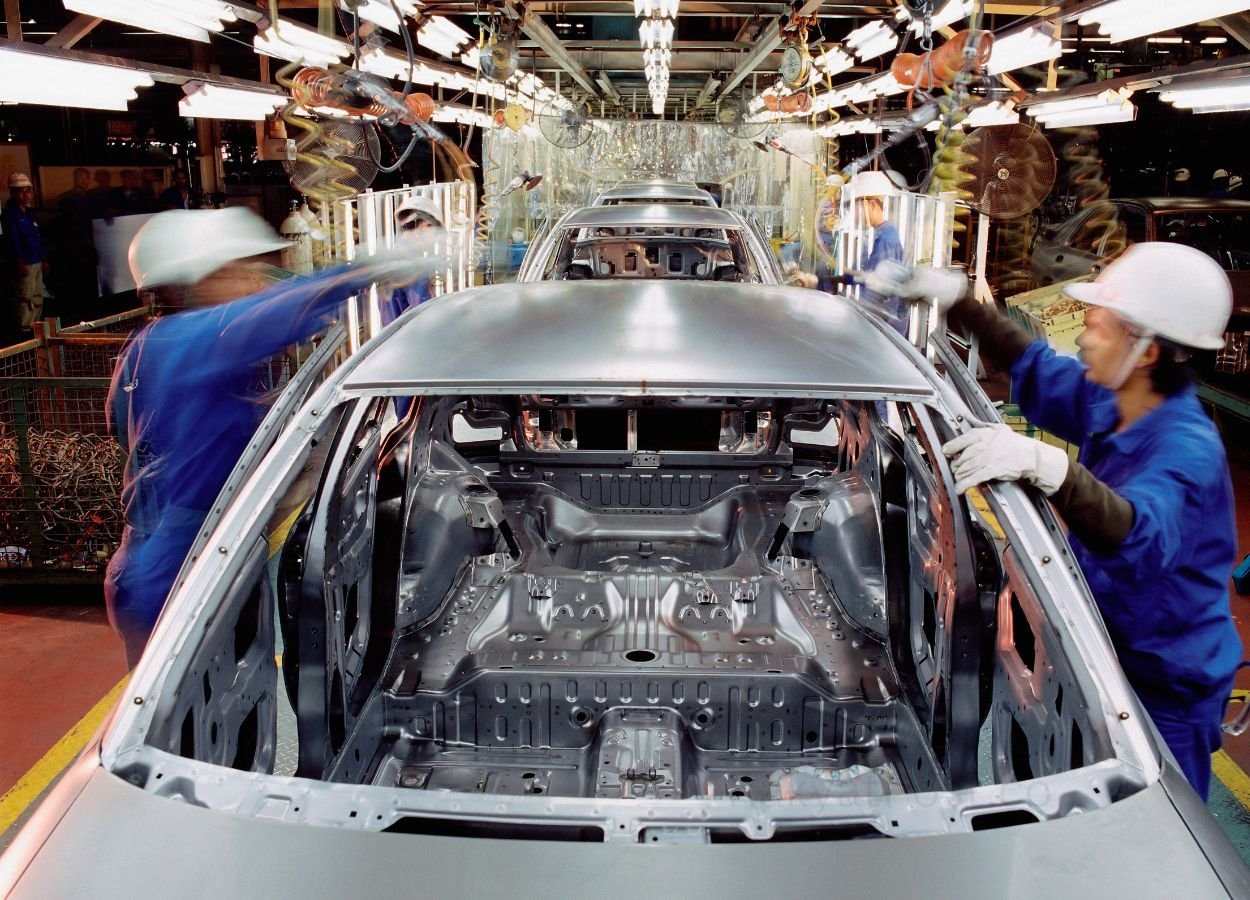
Indonesia needs to strengthen its automotive components industry if it wants to evolve into a true vehicle manufacturing hub rather than remaining primarily an assembly base, according to economist Yusuf Rendy Manilet from the Center of Reform on Economics (CORE) Indonesia.
Speaking on Friday, Yusuf said the country’s rising exports of fully built vehicles reflect positive momentum. However, he emphasized that a competitive manufacturing base is defined not only by assembly volumes but also by the depth of its industrial ecosystem and supply chain, particularly the domestic automotive components sector.
While Indonesia has recorded steady growth in vehicle exports, Yusuf argued that the country still trails regional competitors such as Thailand and Vietnam in developing a comprehensive automotive production ecosystem.
According to him, Thailand has spent decades building a strong network of first-, second-, and third-tier component suppliers, while Vietnam has successfully attracted manufacturing investment through streamlined licensing procedures and stronger integration with the electronics supply chain.
Indonesia, on the other hand, benefits from a large domestic market and abundant mineral resources that support industrial development. However, Yusuf said these advantages remain largely comparative and have yet to translate into a globally competitive automotive manufacturing base.
To strengthen the industry’s competitiveness, he urged the government to improve the overall industrial ecosystem by ensuring stable energy prices, enhancing logistics efficiency, offering export-linked fiscal incentives, encouraging deeper industrial localization, and expanding financing access for medium-sized component suppliers.
Without a stronger domestic components industry, Yusuf warned, the country’s automotive sector risks remaining focused on assembly activities rather than creating higher-value manufacturing capabilities.
He also highlighted the importance of Indonesia’s Domestic Component Level (TKDN) policy, saying it should be used to deepen industrial capabilities instead of serving merely as an administrative compliance requirement.
According to Yusuf, many companies currently prioritize obtaining TKDN certification rather than investing in technological capability and innovation. He stressed that local content policies should move beyond basic components such as tires and seats to include high-value technologies, including powertrain systems, vehicle electronics, and automotive software.
Meanwhile, Agus Gumiwang Kartasasmita said Indonesia is transforming from being primarily an automotive market into a regional vehicle production hub.
Speaking at the opening of the Gaikindo Indonesia International Auto Show (GIIAS) 2026 in Tangerang, Banten, the minister pointed to improved industry performance during the first half of 2026.
Vehicle production reached 615,000 units, up 11.3% year-on-year, while wholesale vehicle sales increased 15.9% to 436,000 units.
Indonesia also recorded solid export growth, with completely built-up (CBU) vehicle exports rising 7.7%, completely knocked down (CKD) exports increasing 38%, and automotive component exports surging 46%. At the same time, imports of fully built vehicles declined by 49%, reflecting the country’s expanding domestic production capacity.

Shama is a Content Specialist and News Writer with 4.5+ years of experience in journalism, press release writing, SEO content, and digital publishing. She covers business, technology, blockchain, cryptocurrency, finance, and corporate communications, delivering research-driven content for media platforms and global audiences.