

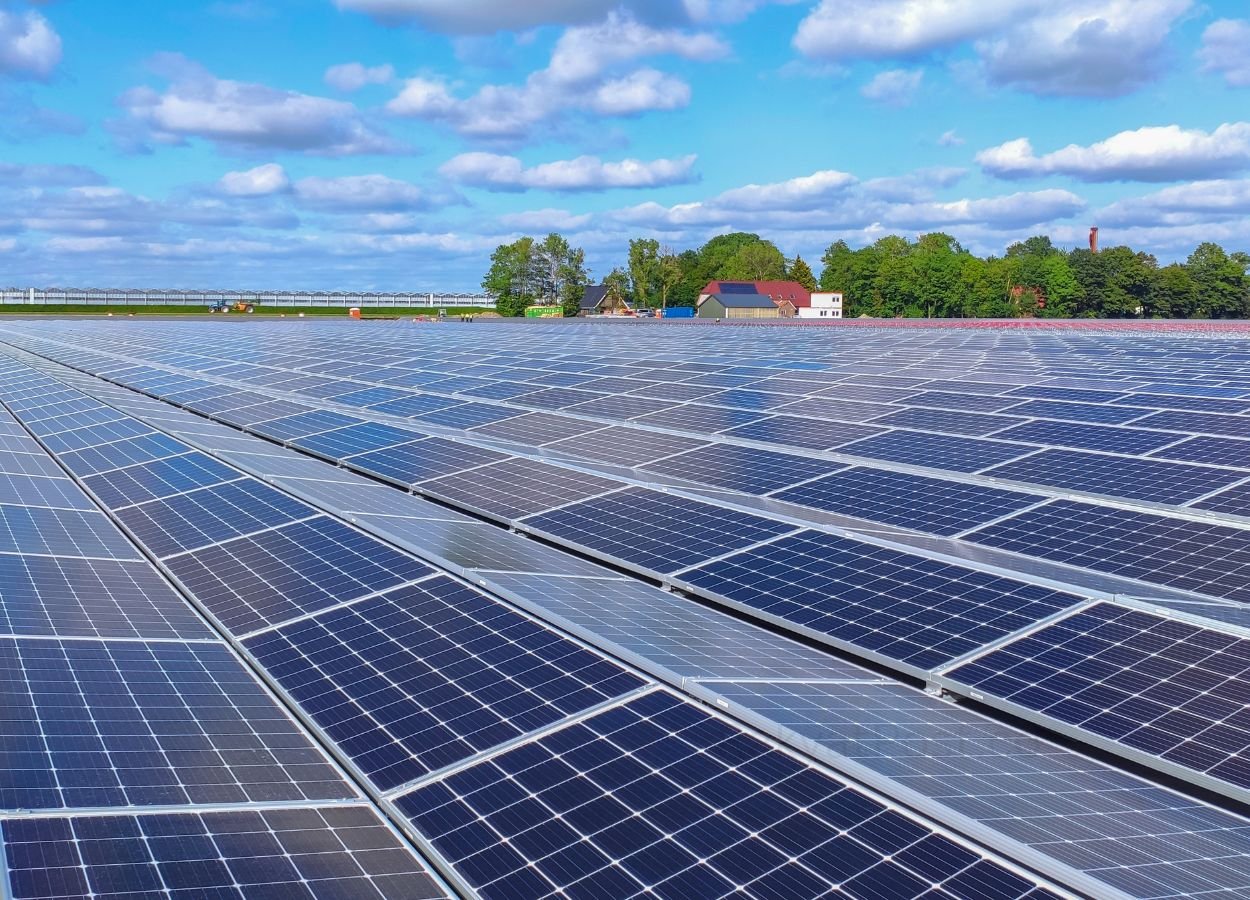
The Foreign Policy Community of Indonesia (FPCI) is urging the government to immediately strengthen regulations to ensure that the development target of 100 gigawatt-peak (GWp) solar power capacity can be achieved sustainably. According to FPCI, the government’s political commitment needs to be translated into regulatory certainty so that the program does not stop at the announcement stage.
FPCI Founder and Chairman Dino Patti Djalal expressed the view after President Prabowo Subianto launched the 100 GWp solar power program on August 25. He said the target was a strategic step that deserved appreciation and was technically achievable for Indonesia.
However, Dino stressed that the success of the program would depend heavily on the availability of a clear legal framework. Strong regulations are considered essential to maintain policy continuity as the program enters the implementation stage across various regions.
According to him, the regulations should provide clarity on the division of responsibilities among institutions, project implementation mechanisms, procurement processes, financing schemes, as well as development stages and targets. Certainty in these areas is expected to increase investor confidence while making government coordination easier.
Dino said the 100 GWp target could also become an important milestone in determining the direction of national energy policy. Therefore, the gap between political commitment and regulatory certainty needs to be closed immediately so that the ambition to develop solar energy can translate into actual projects.
Meanwhile, President Prabowo highlighted the large scale of the program. The development of 100 GWp of solar power will add solar energy capacity to the national electricity system and will be supported by battery-based energy storage technology, or a Battery Energy Storage System (BESS).
The program is not solely aimed at increasing generation capacity. The government is also incorporating plans for dieselization reduction, rural electrification, productive village development, strengthening the electricity grid, and providing energy for industrial areas.
With such broad coverage, the development of 100 GWp of solar power is projected to become part of the transformation of Indonesia’s national energy system, particularly by expanding electricity access while increasing the utilization of renewable energy sources.
To ensure that the program is implemented according to its targets, Prabowo has also appointed a core leadership team responsible for oversight. The team includes several ministers and leaders of state-owned enterprises.
Energy and Mineral Resources Minister Bahlil Lahadalia previously said that 14 projects with a combined capacity of 5.3 GWp were part of the initial implementation phase. The projects are spread across several regions of Indonesia.
Bahlil also explained that the government could intervene in projects that are unable to offer competitive prices through the Independent Power Producer (IPP) scheme. Under certain circumstances, assigning the projects to Danantara could become an option, with the financing structure adjusted according to government direction.

Fajar Santoso is a lifestyle and travel writer at RakyatPost who focuses on culture, tourism, modern living, and destination storytelling across Asia and beyond. With a passion for discovering unique experiences and local traditions, he creates engaging content that inspires readers to explore new places, lifestyles, and perspectives. His writing blends informative journalism with creative storytelling to deliver meaningful and reader-friendly travel and lifestyle coverage.